
Sustainability
How to turn your environmental restoration initiatives into a marketing tool (without greenwashing)
Aug 14, 2026
Environmental restoration initiatives have incredible potential beyond compliance and reporting.
When they’re integrated into sales and marketing operations, they become powerful business tools that build credibility, create differentiation, and give customers a reason to choose you beyond price.
There’s no doubt that restoration initiatives can drive business results. The difference lies in positioning them to do just that.
Why restoration is more than just ESG
Environmental restoration initiatives offer companies a unique combination of credibility, differentiation, emotional resonance, and measurable ROI that traditional marketing tactics struggle to match.
With consumers and B2B buyers becoming increasingly values-driven, this is no longer just about doing the right thing. It’s also about securing and retaining a strategic business advantage.
While it may come as a surprise, the most successful environmental marketing campaigns aren't run by sustainability teams. They're actually embedded seamlessly into sales and marketing operations.
Integrating restoration into existing marketing
The companies that see the strongest results from restoration marketing share a common approach.
Rather than creating new or standalone campaigns, they embed environmental impact into existing marketing infrastructure. This keeps things genuine and resource-efficient. Meanwhile, restoration becomes a natural part of every customer touchpoint.
Ultimately, success comes not from forced messaging, but from thoughtful alignment.
Integrating restoration into campaigns
To successfully integrate environmental initiatives into your operations, you don’t need to create entirely new campaigns. The most effective ones build sustainability into existing practices.
"Buy One, Plant One" promotions are effective for both direct-to-consumer and B2B product companies. This model creates a clear connection between purchase decisions and environmental impact, which makes sustainability feel immediate and personal.
Loyalty programs can incorporate restoration milestones, where customer spending unlocks progressively larger environmental contributions. This gamifies the purchasing experience while reinforcing brand values with every transaction.

Seasonal campaigns add urgency and relevance by connecting restoration efforts to current events or regional concerns. For example, "Every deal signed in Q3 contributes to reforestation in wildfire-affected British Columbia" creates timely emotional resonance.
Product packaging can feature QR codes linking to restoration project updates, transforming every product into a touchpoint for ongoing environmental storytelling.
Channel optimization
Different marketing channels offer different benefits for sustainability storytelling. The key is knowing the strengths of each one and using them to your advantage:
Social media excels at visual storytelling, with before-and-after photos of restoration sites and time-lapse videos of ecosystem recovery creating shareable content.
PR initiatives can highlight community partnerships and biodiversity wins, positioning brands as environmental stewards while generating earned media coverage.
Website integration through impact counters, project maps, and dedicated restoration pages provides ongoing proof points for visitors throughout their customer journey.
Email marketing can deliver regular impact updates, turning restoration progress into consistent touchpoints that reinforce brand values and maintain engagement.
In-store activations can include restoration-themed displays, educational materials, and even virtual reality experiences that transport customers to project sites.
What to say
Credible restoration storytelling needs a balance of quantitative data and qualitative narrative. The most impactful stories combine metrics with human elements that bring your numbers to life.

Include essential data points
Use specific, verifiable metrics: number of trees planted, hectares restored, carbon sequestered, and biodiversity improvements.
For example, "1,000 trees planted across 25 hectares, supporting habitat for 40+ species" provides concrete proof of impact. That’s because sharing data beyond the number of trees planted shows long-term commitment and project quality.
With this in mind, you might share how many trees thrive over time, reinforcing credibility and showing genuine environmental stewardship.
Or consider sharing biodiversity gains, including the return of pollinators, wildlife populations, and soil health improvements, prove ecosystem-level benefits that extend beyond simple tree counting.
When you go beyond basic tree counts, you're showing customers the full picture of what their purchase actually accomplished. And the richer your data story, the more credible your impact becomes.
For example, "1,000 trees planted across 25 hectares, supporting habitat for 40+ species" provides concrete proof of impact. That’s because sharing data beyond the number of trees planted shows long-term commitment and project quality.
With this in mind, you might share how many trees thrive over time, reinforcing credibility and showing genuine environmental stewardship.
Or consider sharing biodiversity gains, including the return of pollinators, wildlife populations, and soil health improvements, prove ecosystem-level benefits that extend beyond simple tree counting.
When you go beyond basic tree counts, you're showing customers the full picture of what their purchase actually accomplished. And the richer your data story, the more credible your impact becomes.
Use qualitative storytelling elements
The story of restoration sites — why they need restoration, what species depend on them, and how local communities benefit — creates emotional connections that pure data cannot achieve.
Take, for example, the
story of Flash Forest founders
, Cameron and Bryce Jones:The Jones brothers moved their family to British Columbia’s Okanagan region, well known for its fruit orchards and vineyards. But after a massive wildfire destroyed more than 250 square kilometres of land and burned around 240 homes to the ground, the brothers knew action was needed.
They created a startup that combines AI, drones and ecological science to plant trees in fire-ravaged areas, quickly and at scale. The drones can fire around 20 seeds a second to the ground, allowing the company to plant up to a million seed pods every day.
This story works because it connects personal experience to environmental action. The brothers weren't just responding to abstract climate data, but to a wildfire that reached their backyard. It shows restoration as a human response to real loss, making the technical innovation feel purposeful, as well as impressive.
Any personal story, from individual impact to community partnerships, particularly with Indigenous groups and local conservation experts, adds authenticity and creates connections with customers.
You can show progress through photos, videos, and field reports, allowing audiences to witness restoration journeys and become invested in long-term outcomes.
What not to say: avoiding greenwashing
Credibility has become the currency of environmental communication. Buyers, investors, and employees are more climate-literate and skeptical than ever. That means that authenticity isn't optional anymore, but key for business success.
For responsible, credible marketing, keep to these three rules:
Be accurate: Every environmental claim must be supported by verifiable data. This means working with credible third-party verification bodies such as Verra or Gold Standard, and providing transparent methodology documentation.
Be transparent: Share both successes and challenges in your restoration journey. Customers don't expect perfection, but they do demand honesty.
Link to verification reports, share project methodologies, and acknowledge when initiatives don't go as planned.
Be proportional: Avoid overstating your impact or positioning small initiatives as comprehensive sustainability strategies. Frame restoration contributions as one part of a broader environmental commitment, rather than your entire climate solution.
And when you're not sure, be more specific, not less. Avoid using:
- Terminology like "eco-friendly" or "green" without specific supporting data
- Carbon statistics based on projections rather than measured outcomes
- "Carbon neutral" without rigorous third-party verification
- "Offset" language unless your program meets strict Science Based Targets initiative standards — use "contributions" instead
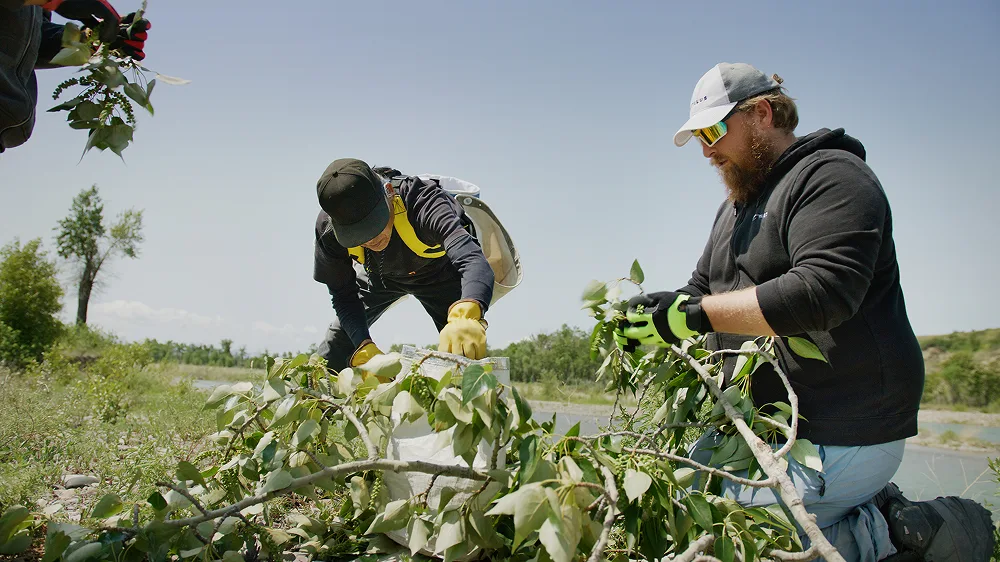
Going beyond campaigns: restoration as sales enablement
Beyond marketing campaigns, restoration initiatives can become powerful sales tools. B2B sales environments have become increasingly challenging, with longer decision cycles, tighter budgets, and mounting buyer skepticism.
In these spaces, traditional deal-sweeteners like discounts and service add-ons now fail to move the needle.
Environmental restoration offers a different approach — one that appeals to values-driven buyers while offering real business value.
Integration strategies
Making restoration part of your sales strategy doesn't require an overhaul of your entire approach. The following integration methods can fit into what you're already doing.
Tiered incentives create purchasing motivation by linking environmental impact to spending thresholds.
For example, "$25K plants 100 trees, but $100K restores an entire acre of habitat" transforms budget conversations from cost justification to environmental achievement.
Impact storytelling in pitch decks provides emotional resonance that purely transactional presentations lack.
Sharing restoration project photos, community partnerships, and biodiversity outcomes helps differentiate your brand from competitors focused solely on price and features.
Quote integration can include environmental contributions as standard offerings. Approaches such as "When you make this order, we'll plant X trees on your behalf" transforms transactions into partnerships.
Trade show presentations can feature restoration project displays, virtual reality experiences, and real-time impact counters that attract booth visitors and generate qualified leads.
Sales Team Empowerment
Restoration selling requires different tools than traditional sales approaches. Armed with the right resources, your sales team can confidently discuss environmental impact and become your program’s most passionate — and successful — ambassadors.
Provide your sales team with:
- Proof points through QR codes linking to project updates, one-page impact summaries, and dedicated microsites to showcase restoration progress.
- Regular training on environmental talking points to ensure consistent messaging and builds confidence when discussing sustainability benefits with prospects.
- Impact reports as customer deliverables to provide ongoing value and touchpoints that strengthen relationships beyond the initial sale.
Restoration can ultimately become a relationship builder, demonstrating purpose and leadership in the B2B context. Your sales team goes from selling features to selling futures, which in turn changes how prospects see your entire company.
Beyond marketing — how environmental restoration initiatives can help multiple departments
There are some departments that directly and obviously benefit from restoration initiatives. And then there are others, which benefit in unexpected, but no less meaningful ways.
Because when done right, environmental commitments become valuable assets for all teams, supporting objectives across the entire organization.
Because when done right, environmental commitments become valuable assets for all teams, supporting objectives across the entire organization.
Marketing teams
By focusing on how customers can make an environmental impact through their purchases, marketing teams can connect with conscious consumers and differentiate in crowded markets.
Restoration initiatives provide authentic storytelling opportunities that resonate with values-driven audiences while generating measurable engagement metrics.
Restoration initiatives provide authentic storytelling opportunities that resonate with values-driven audiences while generating measurable engagement metrics.
Sustainability teams
Sustainability teams can demonstrate real impact to internal and external stakeholders through verified restoration outcomes. These initiatives provide concrete progress toward ESG goals while supporting sustainability reporting requirements.
HR departments
HR departments can use restoration to engage employees and build organizational culture.
Tree planting tied to employee milestones, volunteer opportunities at restoration sites, and internal communications about environmental progress all contribute to talent attraction and retention.
Tree planting tied to employee milestones, volunteer opportunities at restoration sites, and internal communications about environmental progress all contribute to talent attraction and retention.
Operations teams
Operations teams can reinforce ESG alignment and future-proof supply chains by demonstrating environmental stewardship.
Restoration initiatives can support supply chain sustainability goals while providing risk mitigation in environmentally sensitive industries.
Restoration initiatives can support supply chain sustainability goals while providing risk mitigation in environmentally sensitive industries.
Stakeholder-specific messaging
How you talk about restoration depends entirely on who you're talking to. Each department will need to tailor their messaging to different audiences, including:
- For customers: Focus on shared values and easy participation in environmental impact through purchasing decisions.
- For regulators: Emphasize compliance with environmental frameworks and contribution to policy objectives.
- For investors: Highlight ROI, risk mitigation, and alignment with ESG investment criteria.
- For NGOs: Demonstrate genuine commitment to environmental outcomes and community partnership approaches.
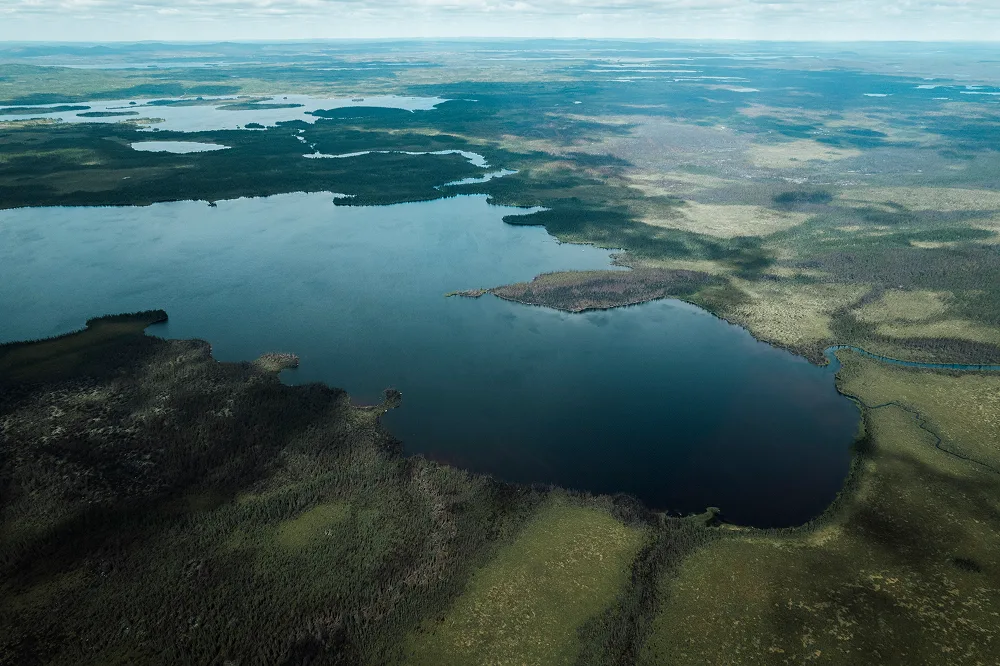
Customer spotlight: brands getting it right
West Coast Windows
is a great example of how environmental restoration can become integral to business strategy while avoiding greenwashing pitfalls. This BC-owned family business, serving local communities for nearly 50 years, shows how you can authentically integrate restoration into sales and marketing operations.
Their "one window, one tree" partnership plants trees in wildfire-affected areas of Treaty 8 territory for every window and door ordered. This creates multiple stakeholder benefits:
- Local relevance: The reforestation addresses recent wildfire damage in their home province, creating emotional resonance among affected customers.
- Cultural respect: Partnership with Indigenous communities demonstrates social responsibility while ensuring restoration efforts align with traditional knowledge.
- Brand alignment: The initiative reinforces corporate values of accountability, respect, and customer commitment, providing sales teams with authentic talking points beyond product features.
- Visual proof: Their website features a real-time ticker showing trees planted to date, providing immediate, transparent evidence of environmental impact.
Their customers end up buying more than windows, ultimately participating in British Columbia's ecological recovery. The emotional connection helps West Coast stand out, justifying premium pricing and building customer loyalty in a competitive market.
Conclusion: restoration as both purpose and performance
Restoration initiatives offer a unique opportunity to align business performance with environmental purpose.
When carried out authentically, these programs drive measurable outcomes across marketing, sales, HR, and operations, all while contributing to real environmental recovery.
The key to success lies in integration rather than isolation. Restoration initiatives that remain siloed within sustainability departments miss their potential as cross-functional business drivers.
Instead, the most successful companies embed environmental impact into existing business processes, creating authentic touchpoints that resonate with stakeholders throughout the customer journey.
When carried out authentically, these programs drive measurable outcomes across marketing, sales, HR, and operations, all while contributing to real environmental recovery.
The key to success lies in integration rather than isolation. Restoration initiatives that remain siloed within sustainability departments miss their potential as cross-functional business drivers.
Instead, the most successful companies embed environmental impact into existing business processes, creating authentic touchpoints that resonate with stakeholders throughout the customer journey.
Getting started with TELUS Environmental Solutions
TELUS Environmental Solutions makes restoration integration accessible through low-lift partnerships with no minimum commitments.
Our ready-made materials include impact reports, marketing copy, and visual assets that keep messaging clear and compliant while supporting your business objectives.
We also provide verified, data-backed restoration initiatives that stand up under scrutiny, helping you avoid greenwashing and build genuine environmental credibility.
Meanwhile, our transparent methodologies and third-party verification mean you can communicate confidently about your environmental impact.
Through strategic restoration partnerships, your business can build authentic environmental credibility while driving measurable performance across multiple departments.
Our ready-made materials include impact reports, marketing copy, and visual assets that keep messaging clear and compliant while supporting your business objectives.
We also provide verified, data-backed restoration initiatives that stand up under scrutiny, helping you avoid greenwashing and build genuine environmental credibility.
Meanwhile, our transparent methodologies and third-party verification mean you can communicate confidently about your environmental impact.
Through strategic restoration partnerships, your business can build authentic environmental credibility while driving measurable performance across multiple departments.
Ready to transform your environmental commitments into business advantage?
Contact us today
.Sources
Forrester. (2021). The future of B2B sales: The five P’s of sales that will power success in the future.
https://www.forrester.com/europe/the-future-of-b2b-sales/
(Accessed 26 June 2025)McKinsey & Company. (2011). The business of sustainability.
https://www.mckinsey.com/capabilities/sustainability/our-insights/the-business-of-sustainability-mckinsey-global-survey-results
(Accessed 26 June 2025)Surfer SEO. (2025). The state of B2B marketing in 2025: What’s actually working right now?
https://surferseo.com/blog/the-state-of-b2b-marketing/#:~:text=Because%20the%20way%20B2B%20buyers,more%20informed%20and%20more%20confident
(Accessed 26 June 2025)