From the Hospital Back Home: What Families Miss During Recovery After a Fall
Senior Care · Sep 14, 2026
"Margaret" is a pseudonym; her story is shared with identifying details changed to protect her privacy.
I want to tell you about a patient I'll call "Margaret." She was 80, six months into widowhood, and still managing on her own: cooking, dressing herself, taking care of her finances, getting around with the cane she'd used since her hip replacement. Then one evening, walking from her bedroom to her living room, she fell forward and caught her face on the arm of a chair.
She didn't lose consciousness. She managed to pull herself up using the chair, and her phone happened to be close by, so she was able to call 911 herself. It could have gone very differently.
Whenever I see someone come in after a fall, I ask the same questions: What was the situation beforehand? What's changed?
"When we think about people who fall, I always look for the underlying cause."
In Margaret's case, quite a lot had changed. Since her husband died, she'd become more isolated, he'd done most of the driving, and they'd done almost everything together. She'd started skipping meals. A new sleeping pill had been prescribed for insomnia that had gotten worse since her loss. And when we compared what the pharmacy had dispensed against what she'd actually taken, the numbers didn't quite match.
None of this caused the fall by itself. But together, it's exactly the kind of picture families often don't see coming, because the changes are gradual, and because older adults frequently don't want to say they're struggling.
"There's that fear of being a burden, or of losing independence and having to move out of their home," I tell families. "So people don't always tell you everything. Sometimes you have to ask the right questions." Instead of asking generally how someone is doing, I try something more specific: What did you have for supper last night? What did you have for lunch? The answers often reveal more than a general check-in ever will.
Navigate life’s changes with more ease and confidence with TELUS Health Medical Alert.
Leaving the hospital is a process, not a checklist
When a fall leads to a hospital stay, there's a natural focus on getting home. But I try to separate two different things for families: completing a discharge checklist, and actually being ready.
"We're good at checklists in healthcare. We check the box, we've done that, we've done that. But this is a process, not a task."
A completed checklist doesn't mean a person, or their family, actually understands what comes next. A few things I recommend every family ask about before leaving the hospital:
- Who's the point person? Privacy rules mean hospital staff can't share information with family unless the patient has said it's okay. Decide early who that trusted support person is, and make sure the care team knows.
- What's actually been set up, and when should it happen? If home care or an occupational therapy assessment has been arranged, ask for a timeline. When should you expect the first call? And if you don't hear anything by then, who do you contact?
- Can you repeat the plan back? With every patient, I ask them to explain the discharge instructions in their own words before they leave. It's a simple way to catch a misunderstanding while there's still time to fix it, particularly for anyone with hearing loss, who may not have had their hearing aids with them in hospital.
Walkers, shower chairs, physiotherapy, and occupational therapy assessments tend to make it onto every discharge checklist. In my experience, a
medical alert device
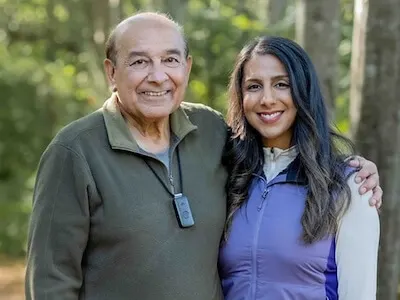
often doesn't, even though I'd personally recommend one for anyone living alone after a fall."It's not if you fall again, it's when."
A device like this can offer a sense of security, being able to get help quickly, and it can give family some of the same reassurance, since they're not going to be checking in every day.
The first weeks home: what "normal" recovery actually looks like
Recovery after a hospital stay takes longer than people expect, especially for older adults. As a rough rule of thumb I use in my own practice: for every day spent in hospital, it can take roughly two days to recover at home, and getting back to something close to where someone was before the fall can take up to three months. Every person is different, so I'd treat this as a general pattern rather than a strict timeline, and if you're worried, that's always worth raising with your health care provider.
The harder question is knowing what's a normal part of that slow climb back, and what isn't.
"I look at their baseline," I tell families. "If an afternoon nap was normal before, and now the naps are a lot longer, I watch that. As they get better, you'd expect them to move back toward that baseline."
But there's one change I want every family to know how to recognize: delirium. It's a sudden shift in someone's thinking, focus, or awareness. In my experience, it's a fairly common event after a hospital stay or a major medical event, and things like anesthesia, a new medication, an infection, or dehydration can all play a role, though a doctor is really the one who can sort out the specific cause.
"There's no such thing as instant dementia."
This is a point I really want to land: it's acute. It just happened because someone's been through a medical event. I've seen families panic when a parent seems suddenly confused, assuming it means permanent decline and an immediate move into care, when what's often actually happening is a temporary condition that responds to treatment, not a reason to jump straight to a care facility.
My advice is simple: treat any sudden change in someone's thinking as a change from their baseline, and get it looked into, rather than assuming it's the new normal. In my experience, once someone has had an episode of delirium, it's worth watching closely for it happening again, so don't be surprised if your care team keeps an eye out for it too.
Medications deserve a second look
A fall is also a good reason to revisit the medicine cabinet with a pharmacist. A few categories I'd flag for that conversation: over-the-counter medications such as sleep aids and cold medications, and prescribed medications such as antidepressants, antipsychotics, and medications to reduce your blood pressure. In my experience, these are commonly discussed as possible contributors to fall risk, worth asking your pharmacist or health care provider about directly rather than changing anything on your own.
One thing I often suggest to patients on blood pressure medication, and it's worth checking with your health care provider if this applies to you, is to take your time: pause for a moment when sitting up from lying down, or when moving from sitting to standing, since some blood pressure medications can affect your balance when you stand up quickly.
The broader question worth asking is: does this medication still match my current health conditions? Something prescribed in the past may no longer be needed, and if there's been a weight gain or loss, the dose might need to change too. I'd suggest a blister pack to help manage your medications, especially if you're taking more than five a day and finding the routine hard to keep straight, or noticing you're forgetting doses.
If it happens again
Once someone has fallen, the fear of falling again often changes their behaviour. They move less, they restrict themselves more, and, somewhat ironically, that tends to increase the
risk of another fall
. I recommend getting physiotherapy or basic group exercise
started early, not to eliminate the risk entirely, since no amount of preparation removes it completely, but to help rebuild the strength, balance, and endurance that can help someone catch themselves.If a fall does happen, how quickly someone gets help matters to how well they recover.
"If you're on the ground for any period of time, it can lead to real complications, and it can meaningfully affect how well someone recovers."
This is where I think a medical alert device does some of its most important work, not as a symbol of decline, but as one of the quickest ways to connect a fall to help arriving. Some devices can also help detect a fall on their own using motion-based technology, so a call can still go out even if someone isn't able to press the button themselves. That said, no device can promise to catch every fall this way, so I'd always encourage pressing and holding the button yourself whenever you're able to, rather than waiting on the automatic detection.
There's another side to this I don't think gets talked about enough: a medical alert can sometimes mean avoiding a hospital trip altogether, not just getting to one faster. When paramedics arrive at someone's home after a fall, they assess the person on the spot, and it's entirely possible they'll decide an ER visit isn't actually needed, and recommend a follow-up with the person's regular health care provider instead. That's a very different outcome than lying on the floor for hours before anyone knows something's wrong.
Beyond medical care
Recovery isn't only medical. In my view, isolation is one of the most overlooked risk factors, especially for someone who's recently lost a spouse and lost the daily structure that came with it. I'd put reconnecting people to community resources, senior centres, social prescribing programs, or group exercise right up there with the medical side of recovery, it's something I encourage families not to treat as optional.
It's a process, not a task. That's a phrase I come back to for nearly everything about coming home after a fall: the discharge plan, the recovery, and the conversations families need to have with the people they love, before a crisis forces the issue.
Navigate life’s changes with more ease and confidence with TELUS Health Medical Alert.
Frequently asked questions
What happens when an elderly person is discharged from the hospital?
A safe discharge means more than being medically cleared to leave. Before someone goes home, I look for confirmation that any needed services, like home care or an occupational therapy assessment, have actually been arranged, that follow-up appointments and referrals are documented with a clear timeline, and that the patient or their support person can explain the plan back in their own words. I think of it as an ongoing process rather than a single checklist to complete.
How long does it take an older adult to recover from a fall?
As a rough rule of thumb I use in my own practice, older adults often need about two days of recovery for every day spent in hospital, and getting back close to their pre-fall baseline can take up to three months. Every person is different, so treat this as a general pattern rather than a fixed timeline, if the pace of recovery is worrying you, it's worth raising with your health care provider.
How can you tell if an elderly person is deteriorating?
I compare someone's current thinking, memory, and energy against how they were roughly six months earlier, that gap is often more telling than how they seem on any single day. A sudden change in thinking or awareness in particular is worth having looked into promptly rather than assumed to be normal aging or written off as permanent decline.
What are the steps of discharge planning?
I wouldn't point to a fixed number of steps. In my experience, treating discharge as a rigid checklist misses the point, it works better as an ongoing conversation. That said, a few things are worth confirming before anyone leaves the hospital: who the designated support person is, what services have actually been set up, what the expected timeline is for any follow-up appointments or referrals, and whether the patient can repeat the plan back in their own words. They have been included in this process, and what matters most to them has been identified.
Navigate life’s changes with more ease and confidence with TELUS Health Medical Alert.
Authored by:

Wendy Evans, BScN
Clinical Advisor
Over 40 years of healthcare experience, including 18 in acute and community care for older adults in Alberta, and a past career as a Registered Nurse certified by the Canadian Nurses Association in Gerontology Nursing.