Apr 23, 2026
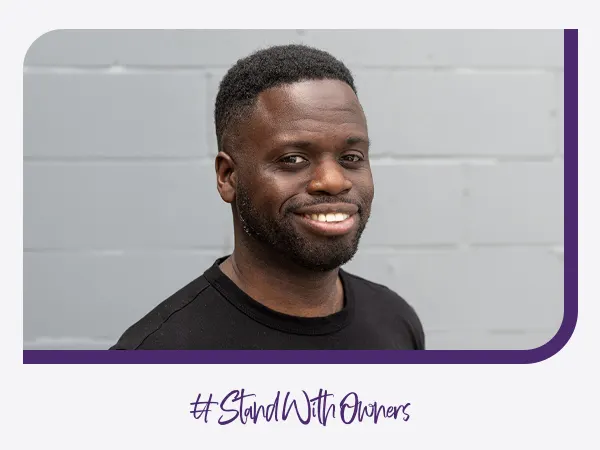
Mo AlGermozi on building a cleaner future for global shipping
Mo AlGermozi co-founded GIT Coatings, revolutionizing hull maintenance with graphene coatings for cleaner global shipping.


Authored by TELUS Business
Mo AlGermozi co-founded GIT Coatings on a conviction that the shipping industry did not have to choose between protecting its vessels and protecting the ocean. Today, operating from global headquarters in Dartmouth, Nova Scotia, GIT Coatings has completed approximately 600 vessel applications since 2022 and earned independent approval from Lloyd's Register.
In this Growth Champions interview, AlGermozi shares what drove him to start the company, the challenges of breaking into one of the world's most conservative industries and how technology helped him build a durable business.
What inspired you to start GIT Coatings?
AlGermozi: The more I studied how the shipping industry managed hull maintenance, the harder it became to accept traditional antifouling coatings as the only option. These products function by releasing toxic biocides continuously into the ocean. The industry had been doing this for decades while treating it as an unavoidable cost.
I kept asking if there was a better way. Graphene offered a fundamentally different path. A material that could create a harder, smoother surface capable of resisting fouling through its physical properties rather than through chemical toxicity. Just better performance with a fraction of the environmental footprint. Once I saw that opportunity, I couldn’t unsee it.
"Our goal was simple: improve vessel performance while eliminating environmental trade-offs. We saw an opportunity to build a cleaner alternative using advanced materials to prevent fouling without releasing harmful chemicals into the ocean."
How were the early days of building the business?
AlGermozi: The early days were hands-on in every sense. The team was small and we were doing everything, including developing the technology, running applications, gathering performance data and making the case to an industry that had been doing things the same way for generations.
Breaking into the marine industry requires data, trust and persistence. Shipowners will not change what goes on the bottom of a multi-million dollar vessel based on a brochure. They need to see results in real-world conditions, validated by people they respect. So we focused on building the evidence base one application at a time.
What kept us going was the belief that if we could demonstrate measurable performance, adoption would follow. Today, we have completed approximately 600 vessel applications, demonstrated roughly 6 percent fuel savings out of dock and achieved Lloyd's Register independent approval. That validation was a significant moment for us.
What was your biggest challenge in growing the business?
AlGermozi: The hardest thing about this industry is that trust is earned slowly and lost quickly. Every application is a statement of confidence in your product. Early on, we were making that statement with limited track record and a technology many people had never encountered before.
But we faced another challenge. We were not just selling a product, but we were asking people to change how they think about hull maintenance entirely. Traditional antifouling is set-and-forget. Our Proactive Hull Management model requires operators to engage continuously with their hull performance data, treating maintenance as an ongoing process rather than a periodic event.
“The real turning point came when we realized that technology alone was not enough. We needed the systems, people and infrastructure to deliver at scale. That meant expanding beyond the coating into a complete performance partnership, combining our graphene coating with robotics, data-driven monitoring and advisory services.”
Opening our Dartmouth headquarters was another significant step. Having our manufacturing, research and development, and global support under one roof gave us operational coherence to scale without losing quality. But as we grew, we realized that operational excellence depends on reliable technology infrastructure. Partnering with TELUS Business provided the backbone to keep our teams connected across time zones as we scaled from startup to global solutions provider.
What advice would you give other entrepreneurs in clean technology?
AlGermozi: Make sure your environmental case and your commercial case are the same case. If you can show that the sustainable choice is also the more efficient and cost-effective choice, the conversation changes entirely.
Invest in your operational infrastructure earlier than feels necessary. The moment you start scaling, gaps in your systems become real problems. Technology should be viewed as an enabler of performance, not just infrastructure. And be patient with trust. In conservative industries, credibility is built through demonstrated performance over time.
Any final words of wisdom?
AlGermozi: Choose your partners carefully and choose them for alignment, not just capability. The vendors and technology partners you work with shape how your business operates day to day. When those relationships work well, they are invincible.
And stay close to the problem you are solving. It is easy as a company grows to lose sight of the mission that started everything. For us, that mission is a cleaner and more efficient global shipping industry. Keeping that in view is what gives the work its meaning and keeps the team motivated through the hard stretches.
“The world is changing fast and the industries that adapt will be the ones that survive. For shipping, that means embracing solutions that improve performance and reduce environmental impact at the same time. That is exactly what we are building.”
Ready to take your small business to the next level? TELUS Business Bundles give you the peace of mind you need, plus the right tech partnership to help you grow.